Notes on Reading — Re:port 003
This Re:port looks at recent books in information design, my personal best reads in 2025, all of my personal ebook reading data and on how to Read Reading.

Dear Readers,
As we find ourselves on the first days of the New Year 2026, I first and foremost want to wish you all the best for the year ahead and express my gratitude — for reading along, subscribing to this blog, and taking the time to engage with my notes and essays here.
As an (information) designer, my craft is usually to visualize, not to write. I express myself in visualizations, structures, diagrams, and visual systems. Words normally come later — if at all. And yet, in winter 2024, I felt the urge to start writing.
I can even remember the exact moment: My partner and I were sitting in the reception room, impatiently waiting for the doctor to call us in for the prenatal screening of our son yet to be born. Suddenly, I turned to her and said, »I am going to start a newsletter.« She gave me an eye roll and asked when I actually plan to find the time to also write newsletters.
She was right. My essays have been coming sparsely and irregularly. That is something I want to change in 2026 — and I hope you are as excited about this as I am. I will double down on my essays and reports and add visual investigations as a new essayistic category, using information design as a instrument to create new knowledge.
On Reading
I wanted to take the opportunity of this New Year’s report to address a cultural technique I know all of you love — otherwise, you would not have subscribed to this newsletter: reading.
Reading is that fruitful miracle of communication in the midst of solitude, where the author speaks to us, and yet we remain alone; where thought is communicated without the intermediary of voice, preserving all its purity; where we are compelled to create for ourselves the intellectual life which the author merely awakens.
— Marcel Proust, On Reading
What I appreciate most about reading in our increasingly efficiency-driven world is that it is not efficient at all. Reading requires us to sit down and do nothing — except let our eyes move across arbitrary symbols while, in our minds, relations, fantasies, ideas, and arguments slowly begin to emerge.
At a time when machines more and more take over our cultural techniques (or at least pretend to do so), reading remains something that still has to be done by humans themselves — alone, without delegation or automation.
From that perspective it is, even more, a miracle — as Proust so beautifully describes it.
Books (from the Field) this Year
I am starting with recommendations of somewhat current information design related books I (finally) read this year and can recommend if you have not already read it:
Operational Images (late 2023)— Had this in my shelf since 2023 and finally found time to read it. The Argument Parikka developes especially about the invisual is very interesting, however I am still waiting for an exact definition what operational images and the invisual actually is ;-). What I like most in this book are the footnotes (Good references for further readings).
Dark Matters: On the Surveillance of Blackness (2015) — This book came directly from Parikka’s footnotes. Although it was published in 2015, I had not encountered it before. It is an essential reading showing how surveillance is fundamentally visual and how visual abstraction creates authority.
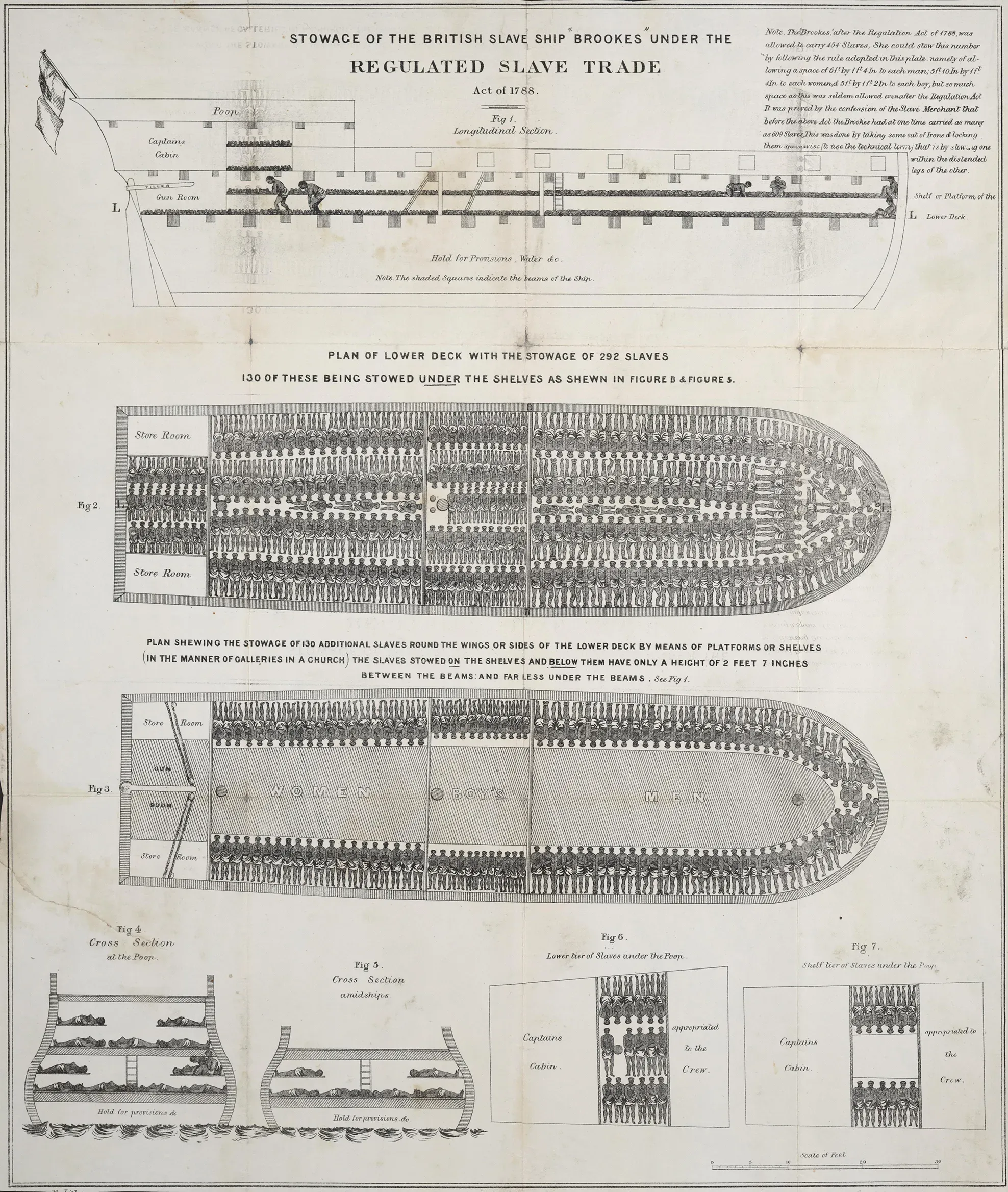
Conspirational Design (2025) — Also an interesting book exploring the thought, how close conspirational theories and visualization strategies actually are to each other. An interesting takeaway for designers about how to be thoughtful of transparency, replicability, and evidentiary within visualizations.
The Syllabus — Not a single book, but a repository of reading material – and my favourite reading platform. I even subscribed to the paid version for a while. You receive well-curated, interesting texts directly in your inbox. Definitely recommended.
Reading Reading — Mapping Textual Spaces
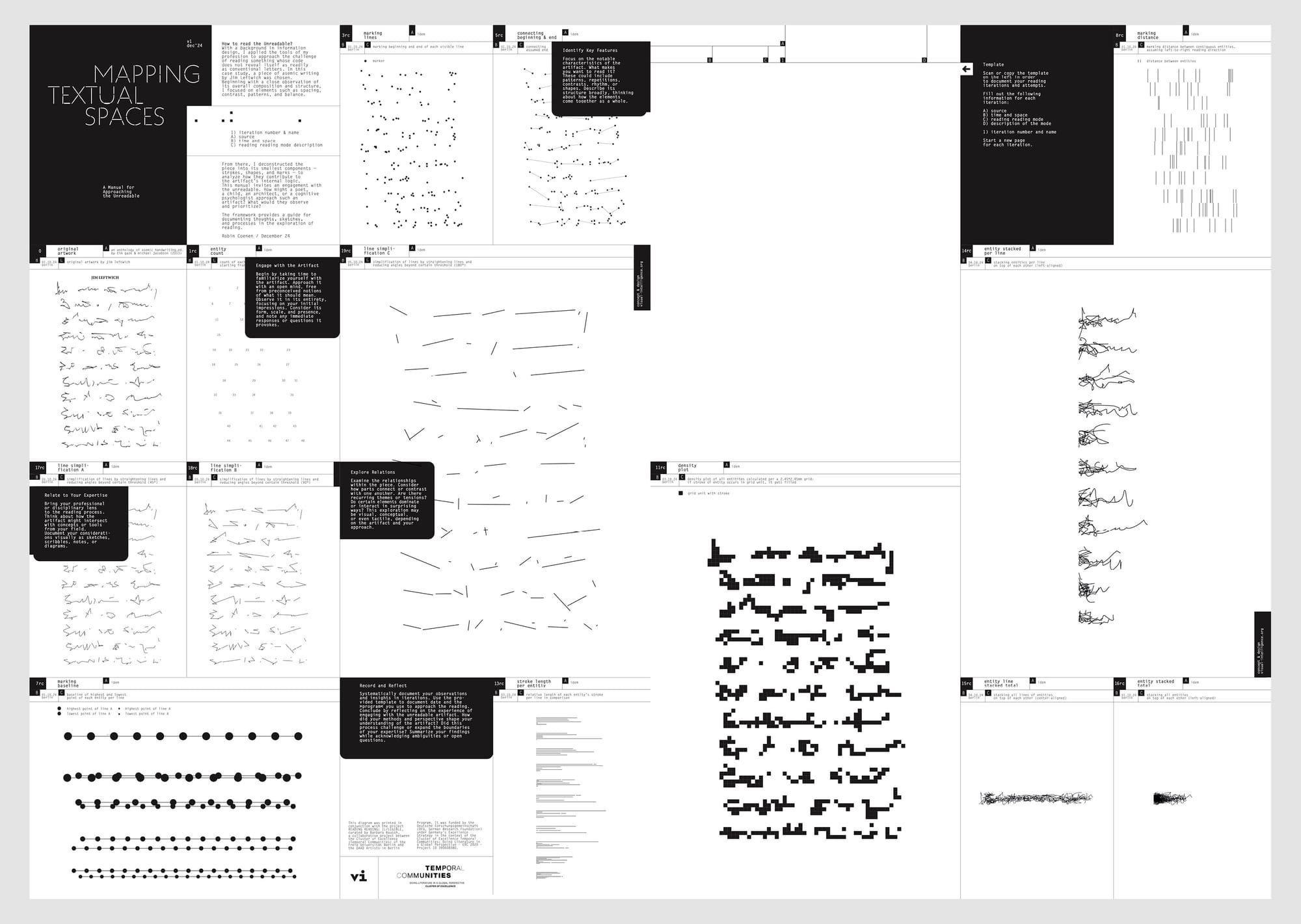
Earlier this year, we were invited by the Temporal Communities Research Cluster at Freie Universität Berlin to contribute to the research project Reading Reading. On an Aesthetic Practice.
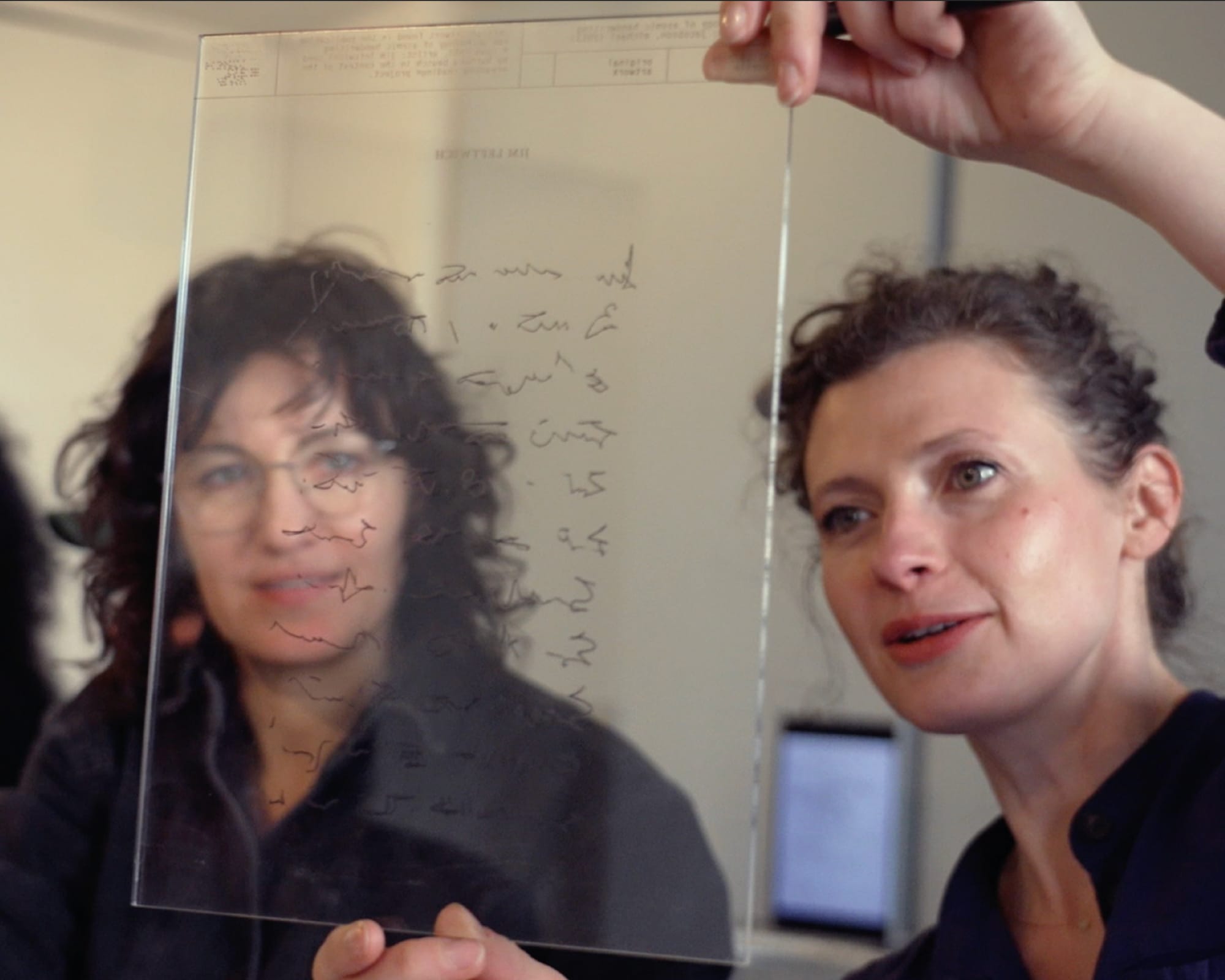
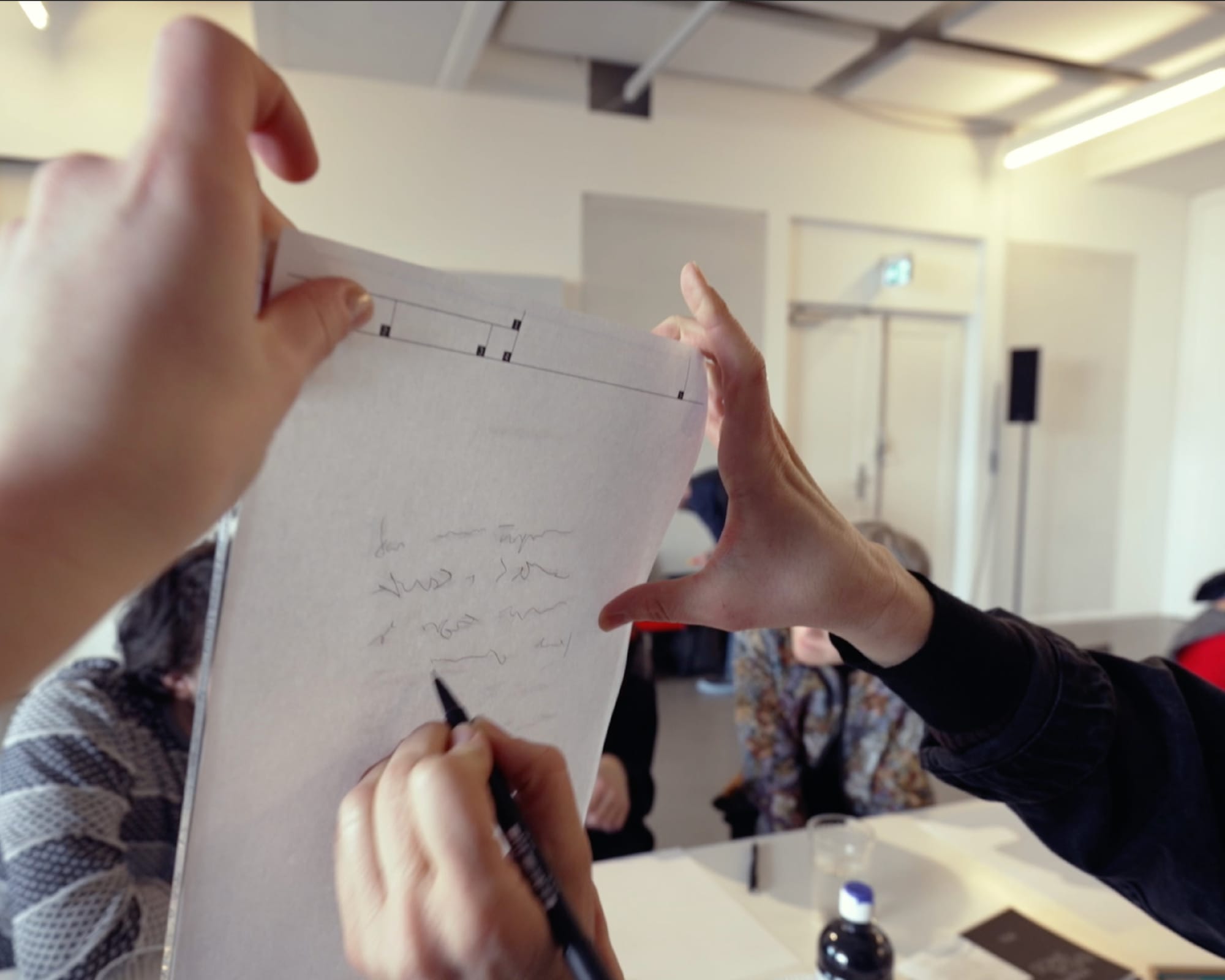
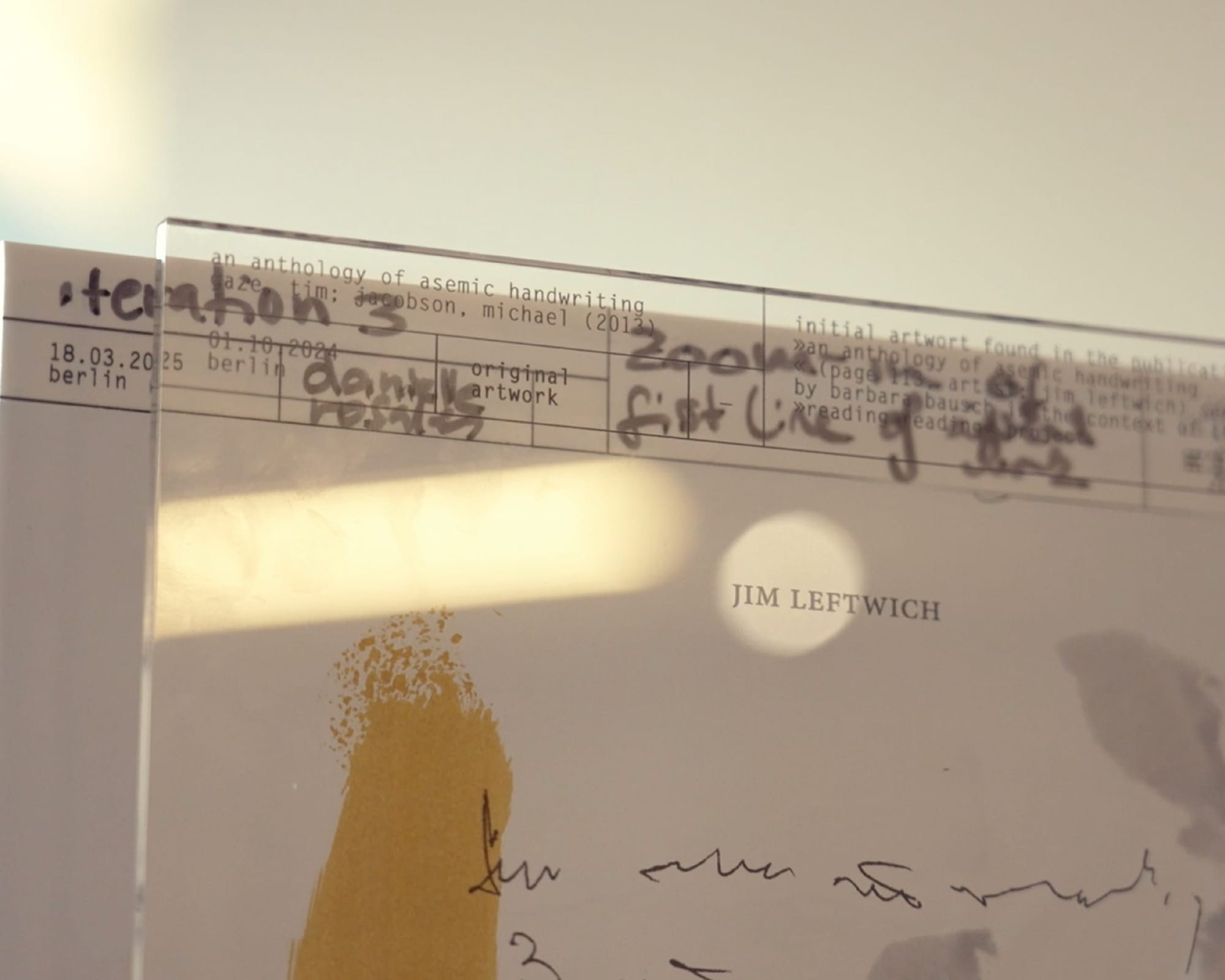
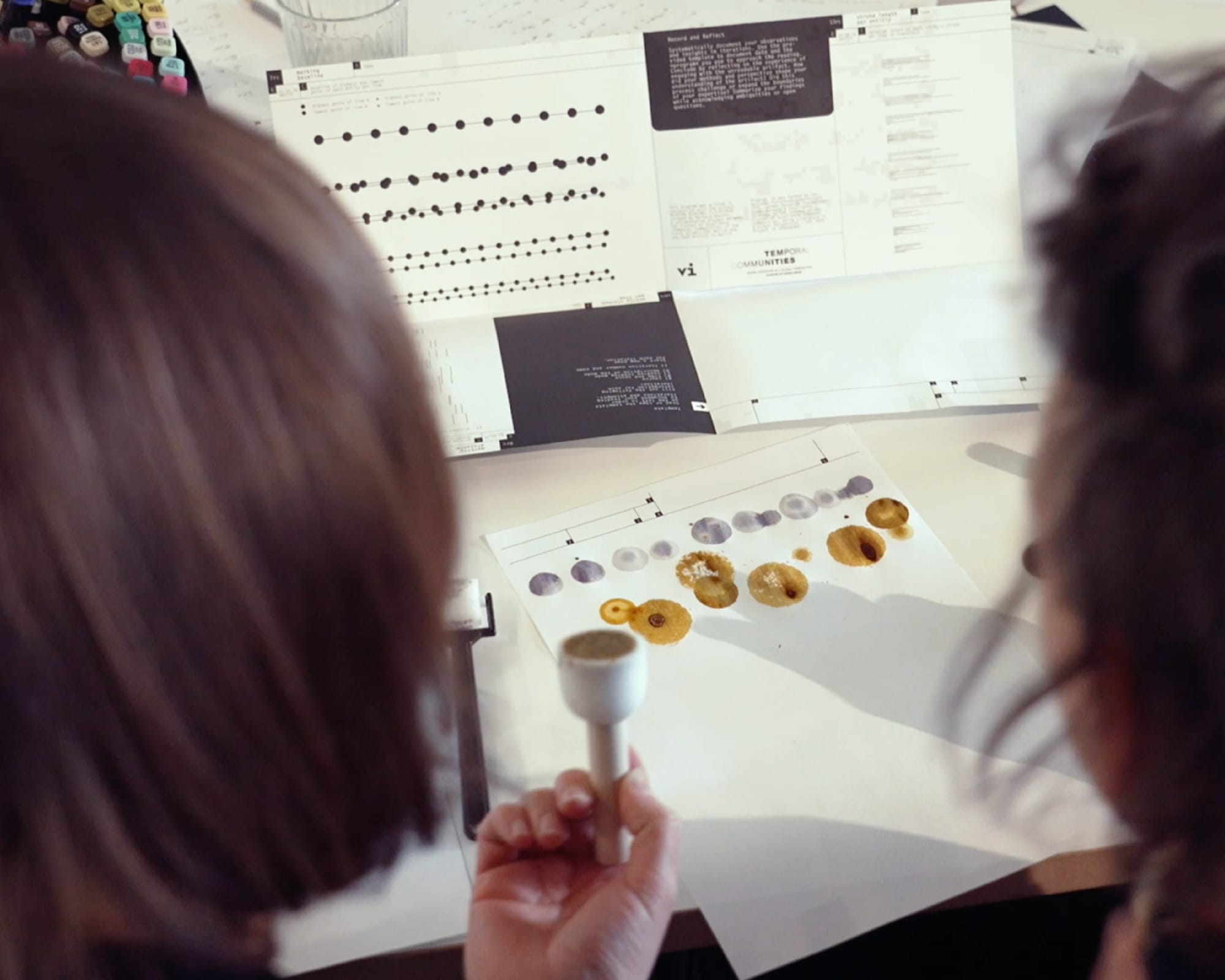
As part of this collaboration, we conducted the workshop Mapping Textual Spaces: Visual Strategies to Approach the Unreadable. The workshop approached reading as a visual, structural, and interpretive practice, focusing on texts that resist immediate comprehension.
Rather than aiming for semantic clarity or completion, participants were invited to engage with unreadable textual artefacts (Asemic Writing by Jim Leftwich) through mapping, diagramming, and visual annotation. By externalising »reading« through visual means, the workshop made visible how meaning emerges over time — through iteration, visualization, comparison, spatial organisation, and collective discussion.
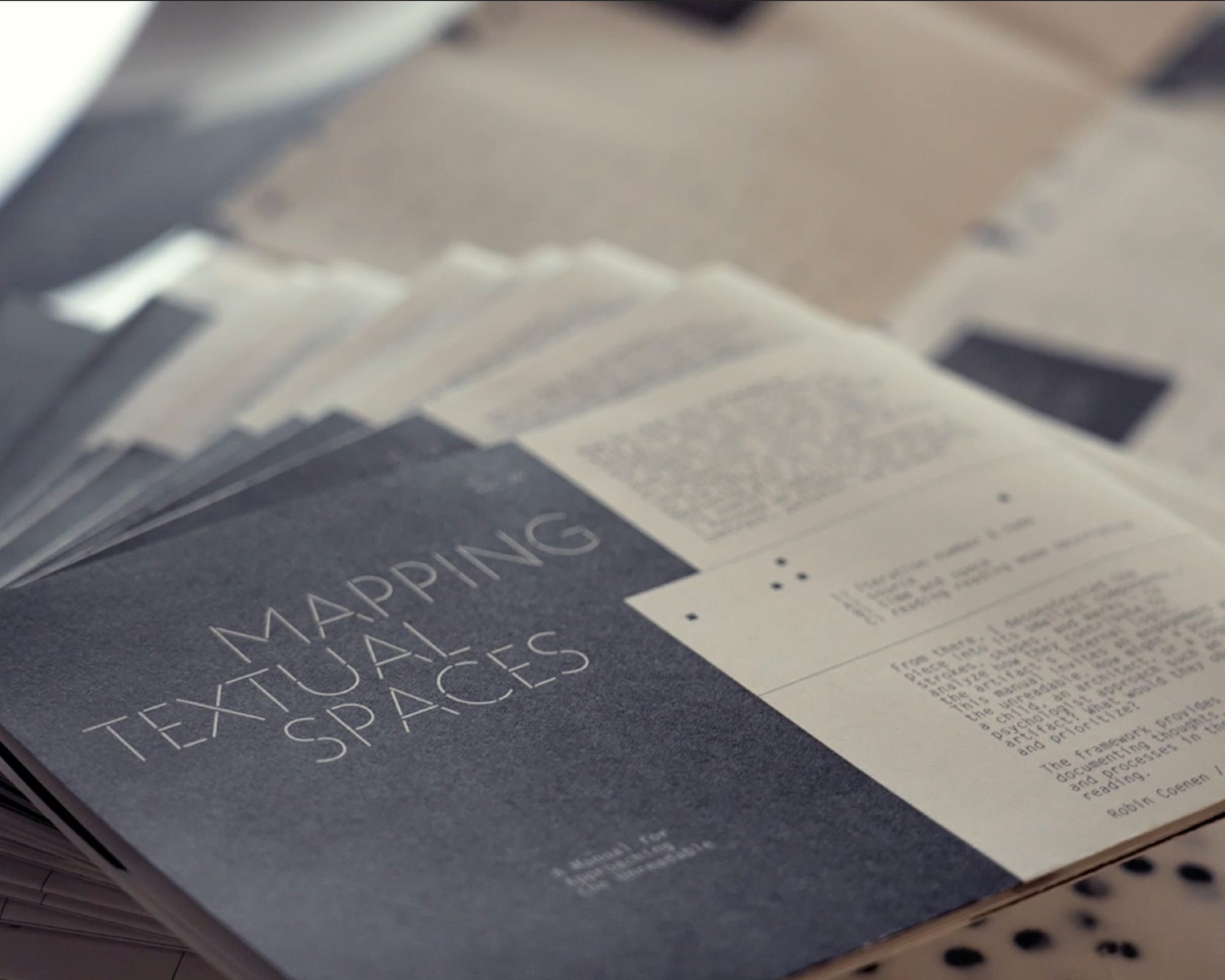
Impressions from the Workshop
Other Books this Year – Data of My Personal Reads
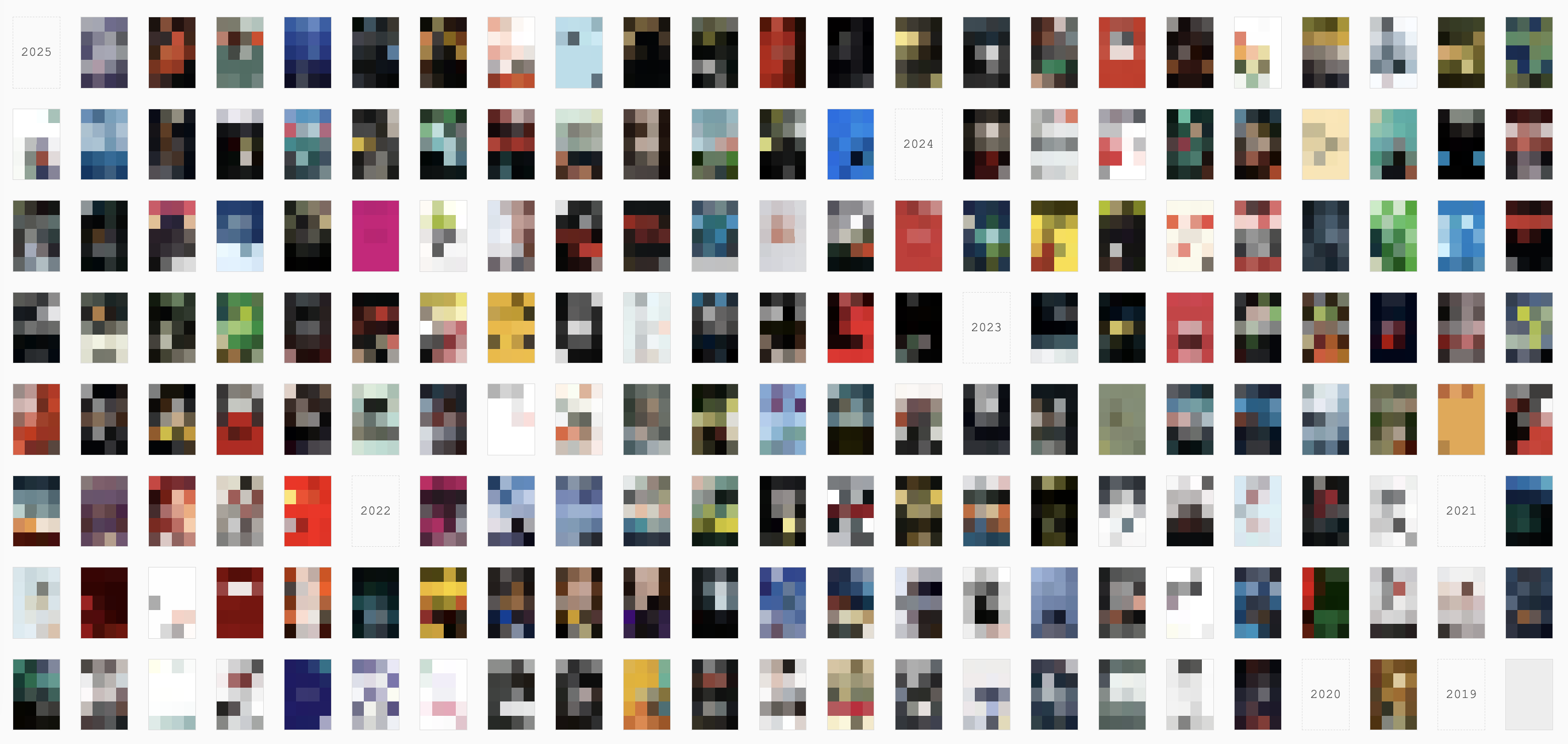
There is an interesting pattern in my reading habits: I buy all professional books related to my practice or research as physical copies. They live on my shelves, can be taken down to look something up, read non-linearly, or revisited over time.
By contrast, almost all of my recreational reading happens digitally. I read novels (I can relax best while reading really bad fictional horror and crime books) as ebooks on my E-Reader. This has proven especially practical with two small children, as it allows me to read in bed without light.
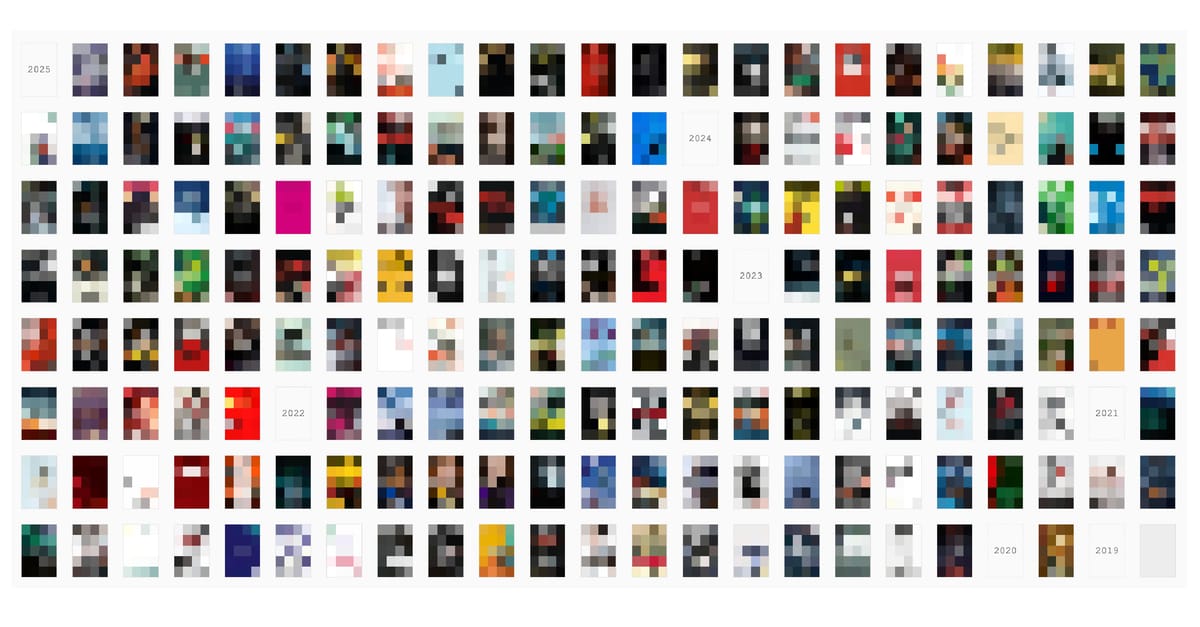
However, the downside of not having physical copies is that I do not develop a strong mental image of the book. I tend to forget the books I read, or what happened in them. During the winter break, I therefore requested all my data from Amazon (I have a Kindl-Reader so I am buying my ebooks via Amazon) and was finally able to visualize that mental image for myself. As is often the case once you finally have data at your disposal, you start to explore patterns:
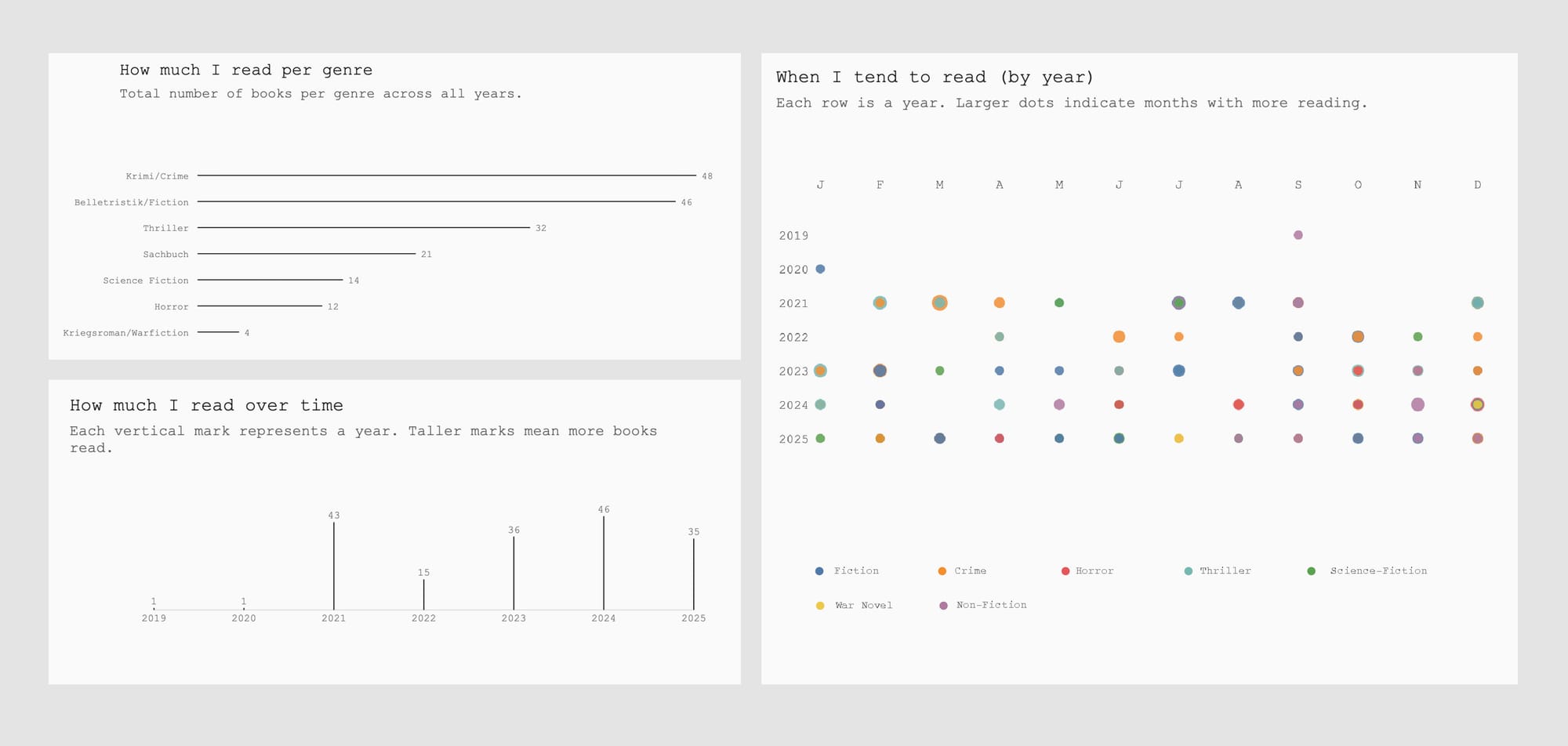
I bought my E-Reader in 2019 while studying in New York City, and it seems it took some time to get used to it. In 2022, our first child was born — which is clearly reflected in my reading behaviour (I simply did not read much). My teaching schedule is also visible: I read recreationally most during my lecture-free periods it seems, probably because I already read a lot of non-fiction, theory and essays during the semester. Autumn appears to be the time when I read the most non-fiction, while my previously mentioned passion for horror and crime dominates during the spring months.
The books I liked most in 2025 — some of them only available in German — include the novel by Szczepan Twardoch about the Russian war on Ukraine, Richard Overy’s account of how the atomic bomb came to be used on Hiroshima, and the timely analysis The Hour of the Predator: Encounters with the Autocrats and Tech Billionaires Taking Over the World by Giuliano da Empoli.
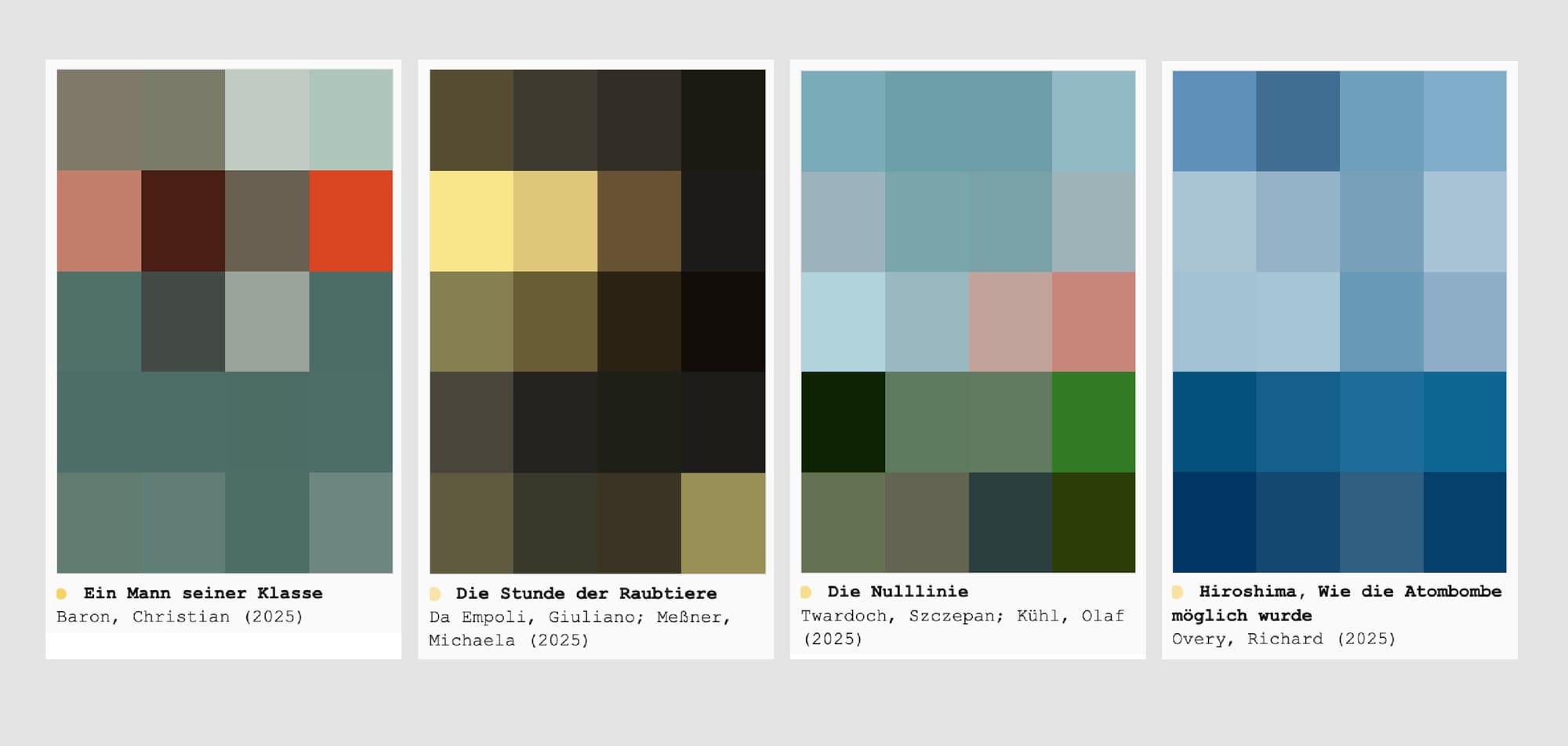
My complete personal reading repository is online if you want to have a look (It is in German though). If you are looking for birthday gifts, my curated favourites section is a sure shot ;-)
If Books Could Kill
Naturally my Notes on Reading end with ... a Podcast.
But hear me out: It’s a Podcast discussing books called If Books Could Kill.
I just discovered it this November and almost listened to all episodes already. I love the two hosts and it's even more fun to listen to when you read the book they discuss in each episode.
I like how they confirmed my feeling about the work of Yuval Harari (Sidenote: I also fought myself through his recent Book Nexus this year, which is an interesting read in the realm of information, data and design), which I always had, but was never really be able to put my finger on. You can find the Podcast in general and the Episode about Harari specifically here.
I Hope you enjoyed this Re:port. Write me if you have any feedback or check out the most recent Essay on Re:connaissance, if you haven't already.
Happy new Year,
Robin